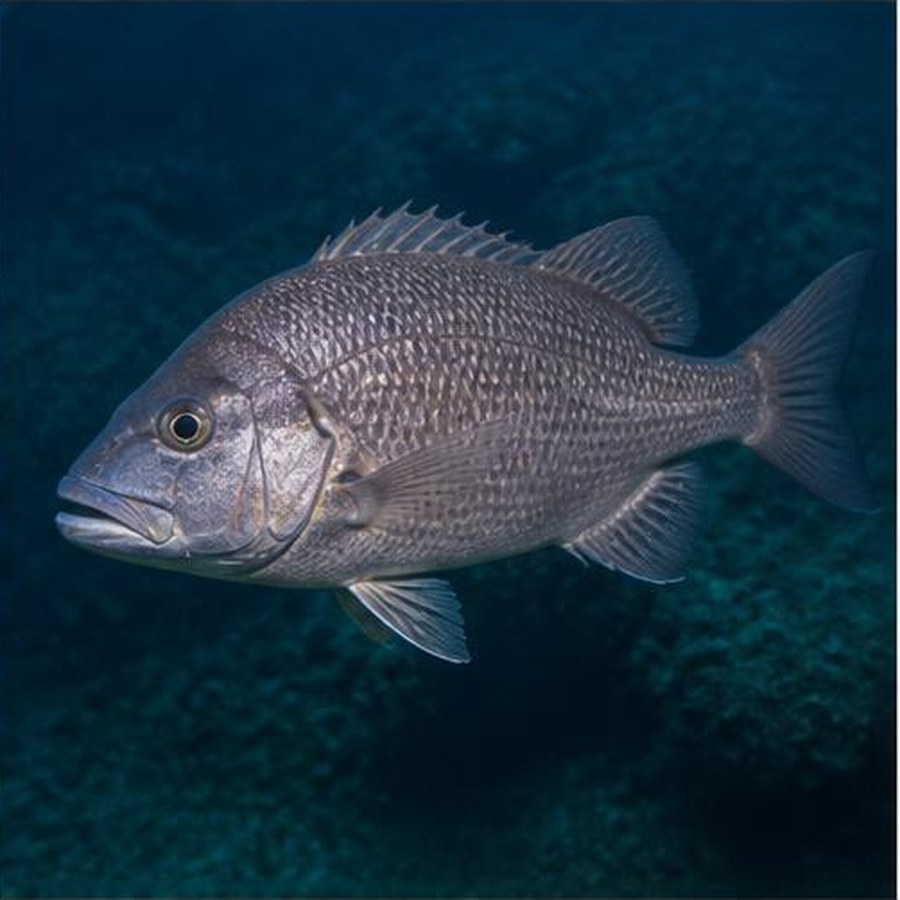
Overview
Dhufish hold on isolated limestone ledges and lumps rather than spreading across flat ground, so pinpoint sounding matters more than covering distance.
They are extremely long-lived and localised, which means a single reef can be fished out quickly. Taking one or two and moving on is the accepted local ethic.
Barotrauma is near certain from depth. Every released fish should go back with a release weight, not simply be dropped over the side.
Where to find them
- ▸Isolated limestone ledges and caves in 25–60 m.
- ▸Reef edges where sand meets structure.
- ▸Deeper lumps holding bait schools on the sounder.
Tackle
- ▸Rod: 15–24 kg overhead or heavy jig rod.
- ▸Line: 50–80 lb braid with 60–100 lb leader.
- ▸Baits: whole squid, octopus and fresh scaly mackerel on 7/0–9/0 hooks.
Tips from the water
- ▸Anchor up-current and drift baits back to the structure rather than dropping straight on top of it.
- ▸Carry and use a release weight on every undersized or excess fish.
- ▸Keep the drag firm early — dhufish bury into the reef within seconds.
Regulations
Dhufish are slow-growing and vulnerable to barotrauma. WA enforces closed seasons, low bag limits and mandatory release weights — carry one and check the current rules.