
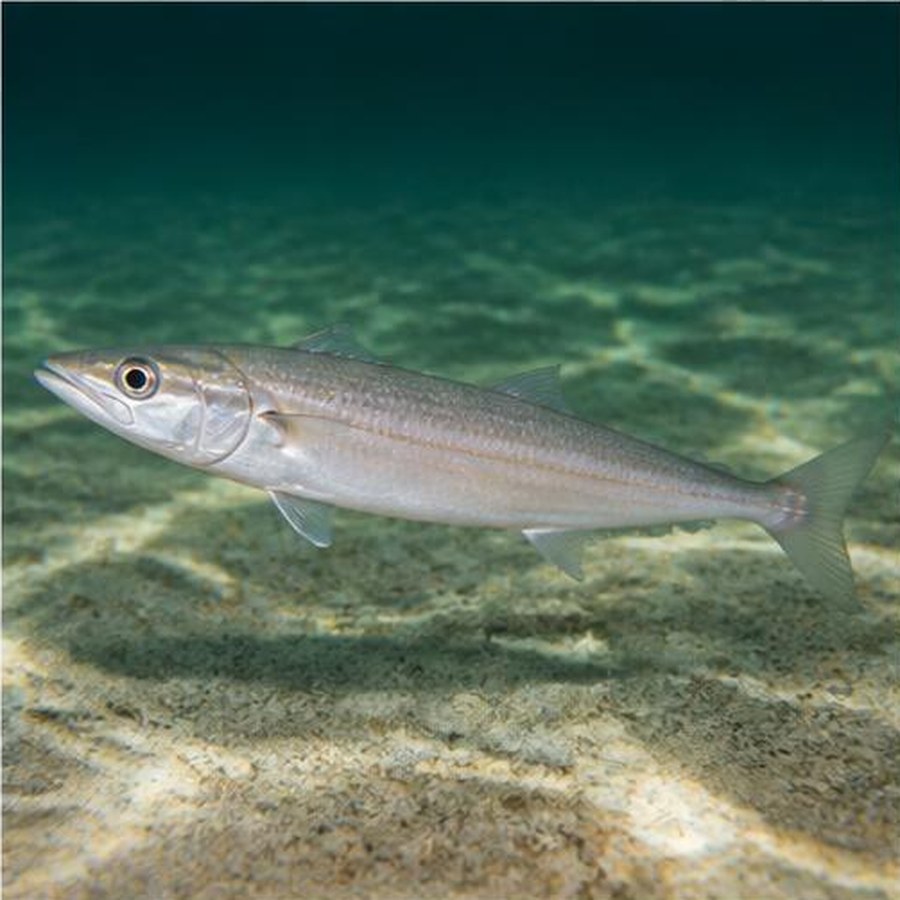
Overview
Trumpeter whiting school heavily over sandy-mud bottoms in estuaries and shallow bays, making them ideal for family and beginner sessions.
They feed on worms, small prawns and yabbies stirred up by current, so a light berley trail of chopped pilchard holds a school in place.
Because they school tightly, a drift with the sounder on will find pockets of fish that then respond to an anchored bait presentation.
Where to find them
- ▸Sandy-mud flats in 3–8 m inside large estuaries.
- ▸Deeper channel edges through the middle of the day.
- ▸Around bridge and jetty pylons on slack tide.
- ▸Bay ground adjacent to seagrass beds.
Tackle
- ▸Rod: 6'6"–7' light spin rated 2–4 kg.
- ▸Line: 8 lb braid with 6–8 lb leader.
- ▸Rig: two-hook paternoster with size 6 long-shank hooks and a running sinker on the drift.
Tips from the water
- ▸Use a fine berley trail — whiting will feed right at the transom.
- ▸Move if you have not had a bite in ten minutes; the schools are patchy.
- ▸Bleed and ice fish immediately; the flesh is delicate.
Regulations
Size, bag and possession limits differ between states and can change each season. Check the current rules with your state fisheries authority before keeping a fish.