Overview
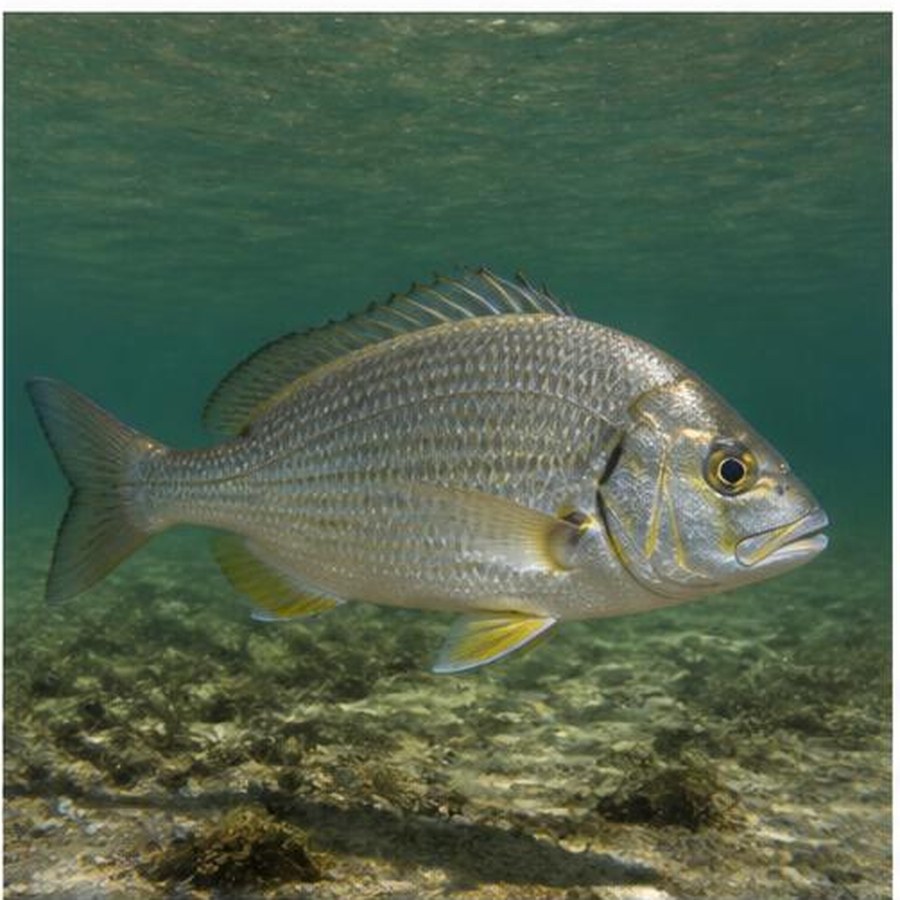
Bream are the species most Australian anglers cut their teeth on, and the one that keeps rewarding refinement. They tolerate everything from near-fresh water in the upper estuary to open ocean rock walls.
They feed opportunistically on crustaceans, molluscs and small baitfish, which is why crab-profile plastics and prawn imitations work so well in the same session as a hard-bodied crankbait.
In clear water bream are genuinely line-shy. Dropping from 8 lb to 4 lb fluorocarbon leader frequently doubles your bites on a hard-fished flat.
Where to find them
- ▸Oyster racks, jetty pylons and pontoons in the mid estuary.
- ▸Rock walls and breakwaters on a rising tide.
- ▸Sand and weed flats at first light, especially in summer for surface fishing.
- ▸Deep holes and channel edges in the coldest months.
Tackle
- ▸Rod: 7' 1–3 kg graphite spin rod with a 1000–2500 size reel.
- ▸Line: 4–8 lb braid with 4–8 lb fluorocarbon leader.
- ▸Lures: 2–3" grubs and crab profiles on 1/16–1/8 oz heads, 38–50 mm crankbaits, small walk-the-dog surface lures.
Tips from the water
- ▸Fish the tide, not the clock — the first hour of run-in over a flat is prime.
- ▸Let plastics sink on a slack line beside structure; most bites happen as the lure falls.
- ▸In dirty water switch to darker profiles and add rattles or vibration.
Regulations
Bream carry size and bag limits in every state. Check your local fisheries rules — limits differ between yellowfin and black bream in some jurisdictions.