Overview
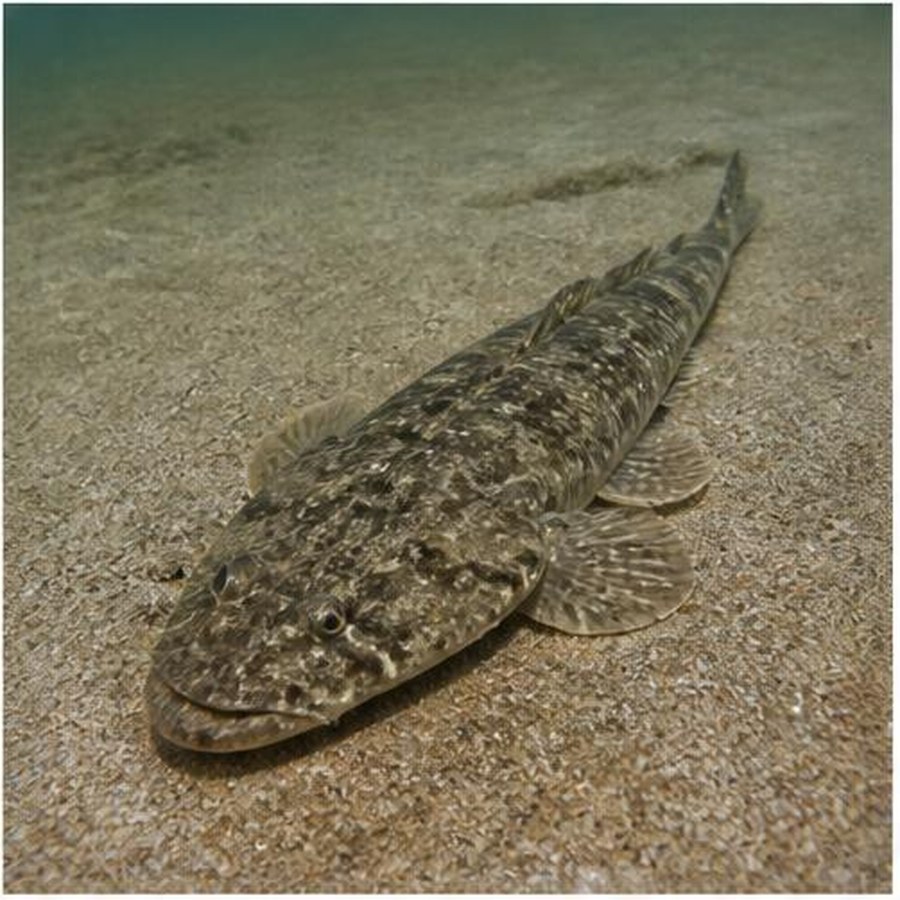
Flathead bury themselves in sand or silt with only their eyes exposed and explode upward on passing prey. Their entire feeding strategy is built around a lure passing overhead.
They stage on drop-offs beside shallow flats as the tide runs out, intercepting bait leaving the shallows. Find that edge and you have found the fish.
Very large duskies over 75 cm are almost always females carrying millions of eggs. Releasing them is the single biggest thing recreational anglers can do for the fishery.
Where to find them
- ▸Sand flats adjacent to deeper channels on a falling tide.
- ▸Drop-off edges and drains where bait funnels through.
- ▸Weed bed margins in the mid estuary.
- ▸Sandy patches inside surf gutters and estuary mouths.
Tackle
- ▸Rod: 7' 2–4 kg spin rod with a 2500 reel.
- ▸Line: 8–15 lb braid with 12–20 lb leader.
- ▸Lures: 3–5" paddle-tails on 1/8–3/8 oz heads, 40–60 mm blades, shallow-diving hard-bodies for trolling.
Tips from the water
- ▸Hop the plastic and keep it in contact with the bottom — flathead rarely chase upward for long.
- ▸Where you catch one, cast again; flathead often stack on the same contour.
- ▸Use a wet cloth or lip grips and mind the gill spikes when handling.
Regulations
Most states enforce both a minimum and a maximum legal length to protect large breeding females. Big duskies should be photographed and released.