Overview
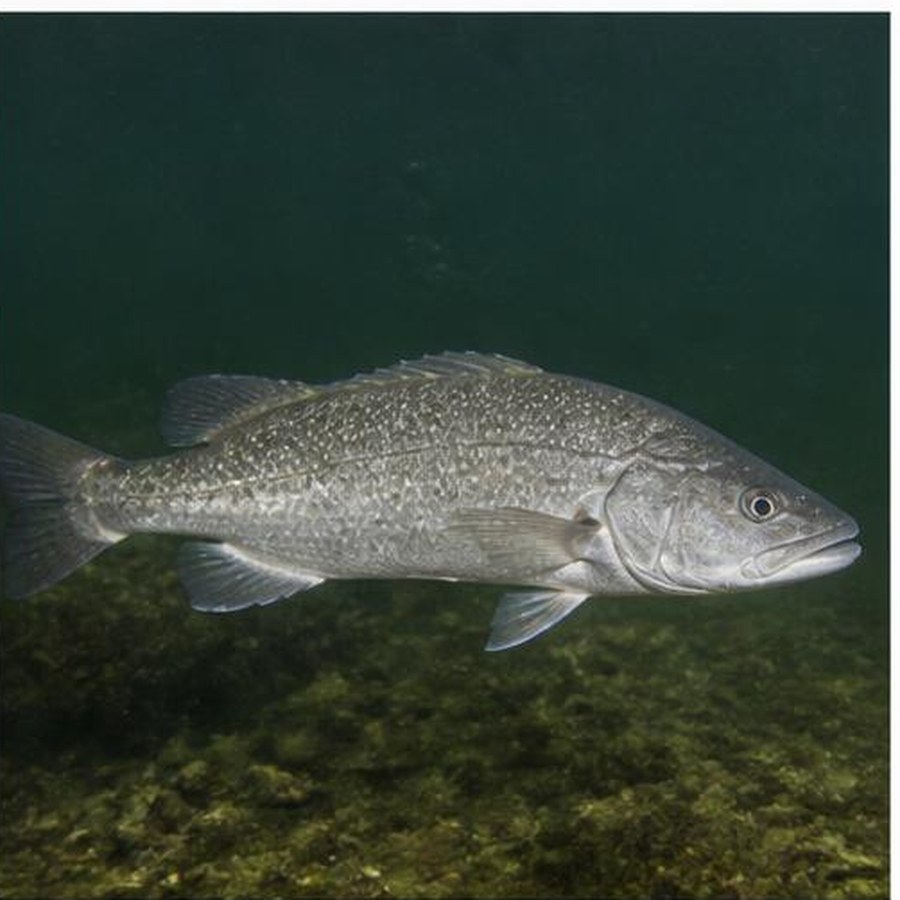
Mulloway have a reputation for being difficult, but the reality is that most anglers simply fish for them at the wrong time. They feed hardest in low light and after dark.
They use their swim bladder to produce a deep drumming sound, and schools often hold in very specific spots — a single bridge pylon or one bend in a channel can hold fish year after year.
Big tides moving bait are the trigger. A dirty run-out after rain, with prawns and mullet flushing downstream, is a classic jewfish window.
Where to find them
- ▸Deep holes and channel edges in the lower estuary.
- ▸Bridge and wharf lights after dark, on the shadow line.
- ▸Surf gutters and beach corners with deep water close in.
- ▸Offshore reef and rubble ground in 20–40 m for schooling fish.
Tackle
- ▸Rod: 7'–8' rod rated 8–15 kg for estuary; heavier for beach work.
- ▸Line: 20–40 lb braid with 40–60 lb leader.
- ▸Baits and lures: live mullet, squid and yellowtail, 5–7" paddle-tails, 60–100 g blades and vibes.
Tips from the water
- ▸Fish the last hour of run-out and the first hour of run-in either side of the turn.
- ▸Stay quiet — anchor chains and hull noise shut down a hole quickly.
- ▸Set a light drag and let the fish take the bait before loading up; jewfish mouth soft baits.
Regulations
Mulloway are heavily regulated with generous minimum lengths and small bag limits in most states. Confirm current legal lengths before keeping one.